The Most Vital Skill
Jan 14, 2026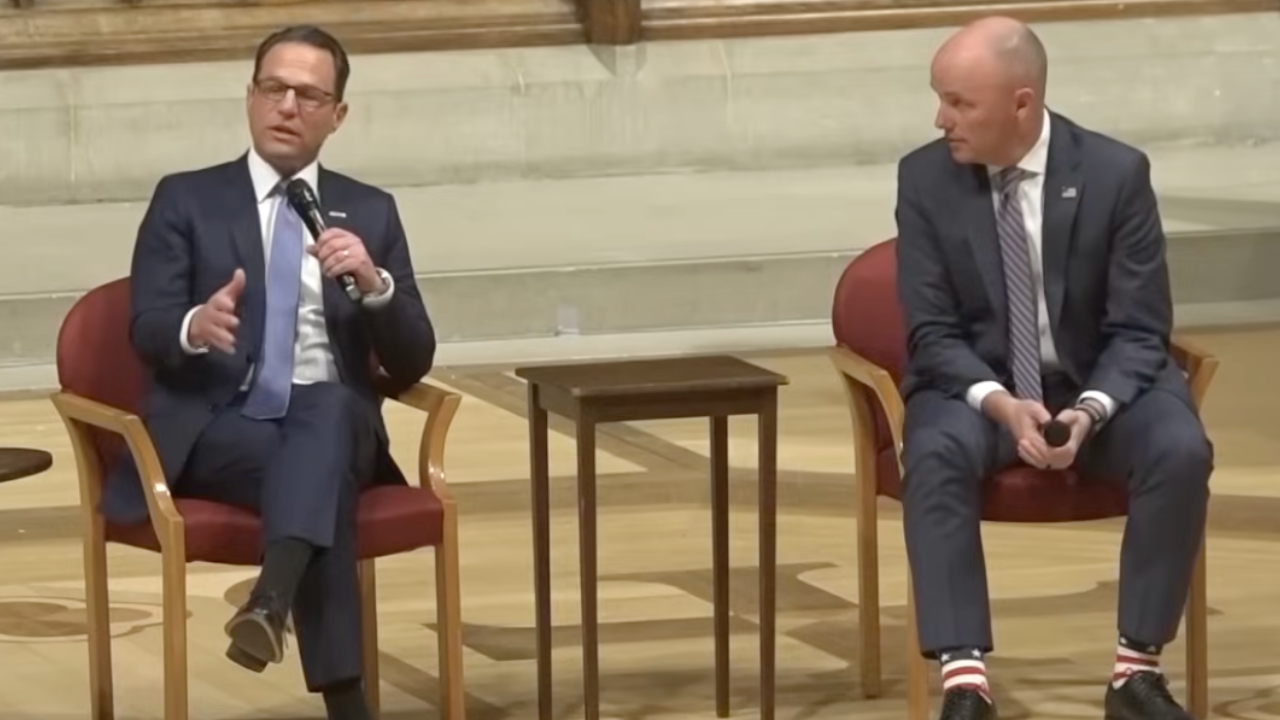
One month ago, two United States governors met in the nation’s capital city, at the Washington National Cathedral, for a conversation moderated by NBC’s Savannah Guthrie. Utah Governor Spencer Cox, a Republican and Mormon, and Pennsylvania Governor Josh Shapiro, a Democrat and Jewish, spoke of the common ground they share, even though they are very different religiously, politically, and socially. They acknowledged their differences and the ways in which they disagree.
But they also highlighted their similarities and focused on the common ground they stand upon.
Among them are that each is close to the same age, are married and have four children, are elected state officials, and share a deep sense of guilt and regret that recent traumas in their lives, because they are governors, have literally put their families in danger.
In April 2025, the Pennsylvania governor’s residence, in Harrisburg, was fire-bombed shortly following a Passover Seder that the Shapiros hosted in the governor’s residence. Their family had to be roused from bed by firefighters and police while the residence burned. The perpetrator, who confessed, was caught and jailed, admitting that the small sledgehammer he carried into the residence was meant to be used to kill the governor if he was found inside.
Then in September 2025, political activist and media personality Charlie Kirk was shot and killed at Utah Valley University as he spoke outside on the campus. As the governor of Utah, Spencer Cox was looked upon to lead the state’s response to that horrific assault. The first person to call Governor Cox was Governor Shapiro, who knew what it was like to have to speak to and reassure the citizens of his state and the nation after such a devastating attack. The two governors have kept talking and listening to support one another in response to their respective traumas and responsibilities following the attacks. As an additional piece of regrettable information, Governor Cox related that just two days before the National Cathedral conversation, the Utah state capitol, in Salt Lake City, received a call from a man who declared that he wanted to shoot the Governor in the head.
We live in increasingly tense and fraught times.
Both governors recognize the terrible disconnection and loneliness in our culture, and both want to do something about it. Both see it as more than a political or ideological problem, and more of a human problem to be solved. They believe that it transcends politics and ideology. They aim to work together to determine ways to enlist others to work with them to find common ground to address this common - and widespread - human challenge.
They believe that listening is a key to addressing the challenge. We agree.
Without fail, during presentations to groups about our mission, work, and the vital importance of listening, when we ask “Can you remember a time when you have felt you’ve been listened to well?” few, if any, hands go up. But when we turn the question around and ask, “Can you think of a time when you felt as if you were not listened to well?”, the majority of the audience’s hands go up, high.
It’s a telling reminder to us constantly, that listening well is a skill that is incredibly underdeveloped and so narrowly practiced.
Most of us don’t actually stop talking enough to actually listen. We interrupt. We talk over one another. We often change the subject from what the person is saying to us about their circumstances and center it on our own circumstances. We don’t wait for a full response or for someone to finish their thoughts. We get uncomfortable with pauses or momentary silences and jump in too quickly to fill the void. We feel as if we need a retort, a response, rather than providing a patient listening ear. We silently rehearse our responses, instead of trying to more allow one another to fully express our thoughts. We think that we always have to have an answer to what someone is saying, or to fix a problem, rather than simply and mostly giving them the space to vent, explain, or share.
But most often, what all of us want is simply to be heard, without interruption and without judgment. We mostly want validation for our feelings and experiences. We want to know that someone else simply cares.
Listening is an act of respect and love for one another. Listening is an act of connection, of understanding better. Listening is an act of kindness that can defuse tensions, lessen misunderstandings, and build trust. Listening actually enables us to make better decisions, to see people in a more positive light, and to get out of their way when they are challenged. Listening is the way into another’s heart.
Listening is the number one skill we need to have to live a connected, relationally healthy life. Listening is the most helpful, intentional skill we can cultivate in ourselves and for each other.
Listening compassionately and with intention is the lifeblood of our relationships, of our work, of our continued growth as human beings and as a civilization. It can happen anywhere, at any time, with anyone. The more we do it, the more we will understand, and the better we will be.
It is incredible what good listening - with respect and by seeking common ground - can help us to achieve.
Stay connected with news and updates!
Join our mailing list to receive the latest news and updates from us.
Don't worry, your information will not be shared outside the organization
Authors