Life's Aggressive Thrill Ride
Jun 10, 2026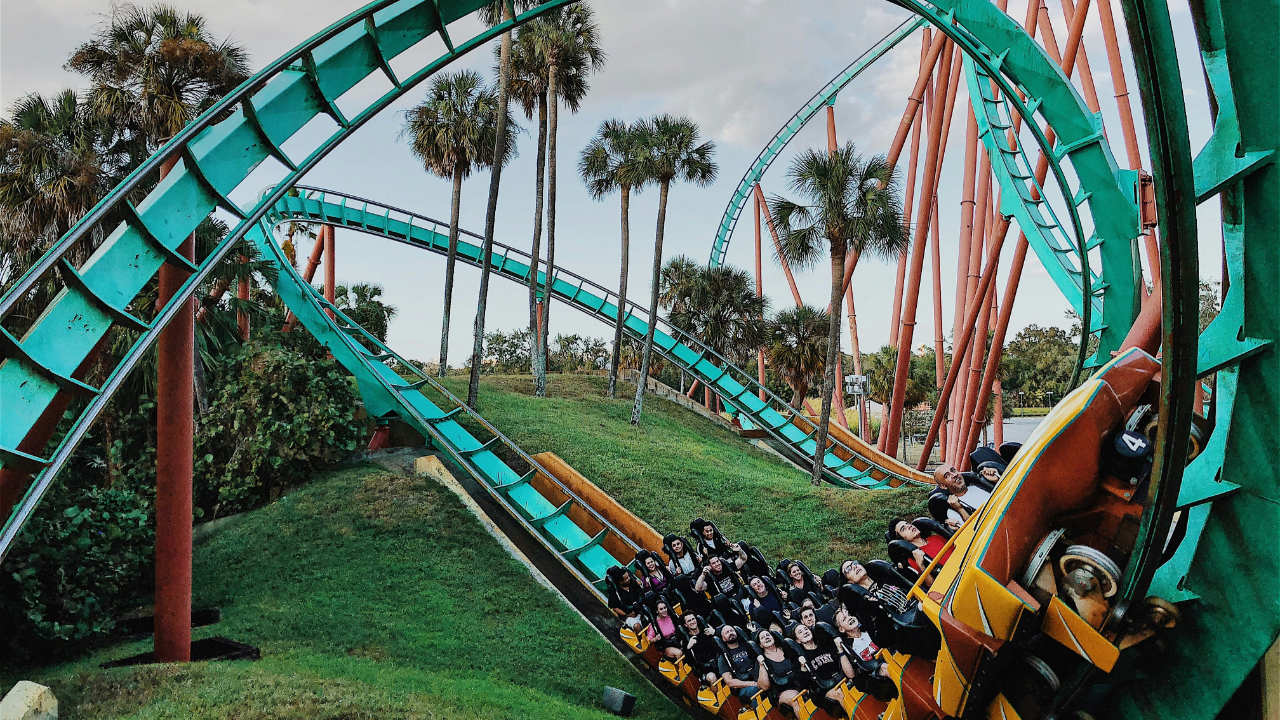
Earlier this week, my middle son David and his 10-year-old daughter Elle rode, for the first time, the newest big ride at HersheyPark, the destination amusement park in our town of Hershey, Pennsylvania - Twizzlers Twisted Gravity. It’s a huge swing, billed as an “aggressive thrill ride” 137 feet in the air, which reaches speeds of 68 miles per hour at its fastest.
They loved it!
I take my grandchildren to HersheyPark often during the seasons it’s open; we have season passes. Three of them - including Elle - have been begging me to take them on that ride - and I had demurred. I didn’t want to do it until their parents experienced it and gave permission for the kids to ride it under my supervision. Besides, to be honest, I was a little afraid to ride it with them or even without them. It’s really high and the people on it are always screaming loudly and fearfully. The screaming made me question if the ride was too terrifying for kids - and even for me, who loves tall roller coasters that turn you every which way and upside-down. I was just concerned that it might be a little too intense.
But since David and Elle loved the ride, I am quite certain that my grandkids won’t buy my strategy of demurring for them (and me) to ride it any longer. My fate seems sealed if I want to be a fun and cool grandfather.
I asked David if the ride was as scary as it looks and sounds. He indicated that it wasn’t so bad, that it was fun! But he also indicated that what was bad was all the loud and fearful screaming from so many of the other riders. The noise and fear they expressed was a bit disconcerting to him.
It’s fascinating how our terror and our anxieties can affect those around us, often striking fear or terror in them quickly and easily.
But it’s just as fascinating how the opposite can be true. Our joy and hopefulness can also affect those around us just as quickly and easily.
It can work, too, with our gratitude, our calmness, our positivity, our patience, and our reassurance. It definitely can work both ways, with our worry and our apprehension as well as our serenity and our peacefulness.
This spring, on April 23, at a documentary film event that Someone To Tell It To hosted with our special guest Benjamin Wagner, the film’s main subject and director, Benjamin stated something beautiful and profound on the stage following its premiere:
"Having coffee with Someone To Tell Us To listeners is not unlike spending a half hour in Fred Roger's office."
We could hardly have a more beautiful and affirming endorsement than that!
If we, in our work of listening and teaching others to listen better, can project the kind of calmness, placidness, and reassurance even close to what Mister Rogers did through his work for both children (and adults), we can be very proud of what we convey and model, and how it affects the way others’ feel.
Benjamin Wagner termed the ability to affect others like that, “co-regulation”, which is defined very generally as people influencing each other’s nervous systems to stay calm.
According to the Child Mind Institute, co-regulation is a psychological term about human interactions that have the result of each participant regulating the behavior of others, often their emotions. As we all probably know, emotions can be volatile. They can prompt us to do or say things that are harmful, hurtful, or just plain regrettable — so we need to do our best to manage, or regulate, them. The Child Mind Institute, putting it in terms of children’s and parent’s interactions, states that self-regulation looks like taking a deep breath and saying, “Please put your Legos away after you finish playing, so I don’t step on one” instead of scooping up every Lego in your house and chucking them out the window.
The Institute writes, “But self-regulation is not innate; it’s a set of skills everyone must learn. Developmentally, kids are like cars with faulty brakes, born with the capacity to experience every shade of emotion but none of the tools to regulate them …”
“Co-regulation is a mutual act, an exchange of calm that occurs between two people … It means actively managing your own emotions to help kids learn to manage theirs.”
It works much the same with and between adults, as well. It’s actually not only a behavioral action, but a biological one, too.
Research shows that stressful situations and reactions produce a physical stress hormone called cortisol. The distress of others can cause our cortisol levels to rise and us to feel similar distress.
Someone To Tell It To listeners hear from people who are in distress every day. Their cortisol levels can be rather high because of their distress. So, our goal is to help lower those levels in others by modeling calmness, hopefulness, and steadiness. It helps. It works. It changes attitudes, reactions, and responses to distressing circumstances.
So, when life seems out of control and upended, frightening and terrorizing, we need ways to calm ourselves down and others who can help us to do that. It’s one thing to be momentarily petrified by a safety-regulated, 1 minute 10 second, aggressive thrill ride. That scare will generally end very quickly. Plus it’s one we choose to experience - for fun. But so many of life’s twists and turns that hurt us, knock us down, and pull the foundations right from under us, are out of our control.
Having others in our lives to whom we can turn - for perspective, reassurance, and safety - can make all the difference in our upended lives. They can help to under gird us again and create better days to come, reminding us that we don’t have to be all alone in our distress.
Photo by Matt Bowden on Unsplash
Stay connected with news and updates!
Join our mailing list to receive the latest news and updates from us.
Don't worry, your information will not be shared outside the organization
Authors